Kyle, TX · Hays County
Attic ductwork and airflow in Kyle, TX
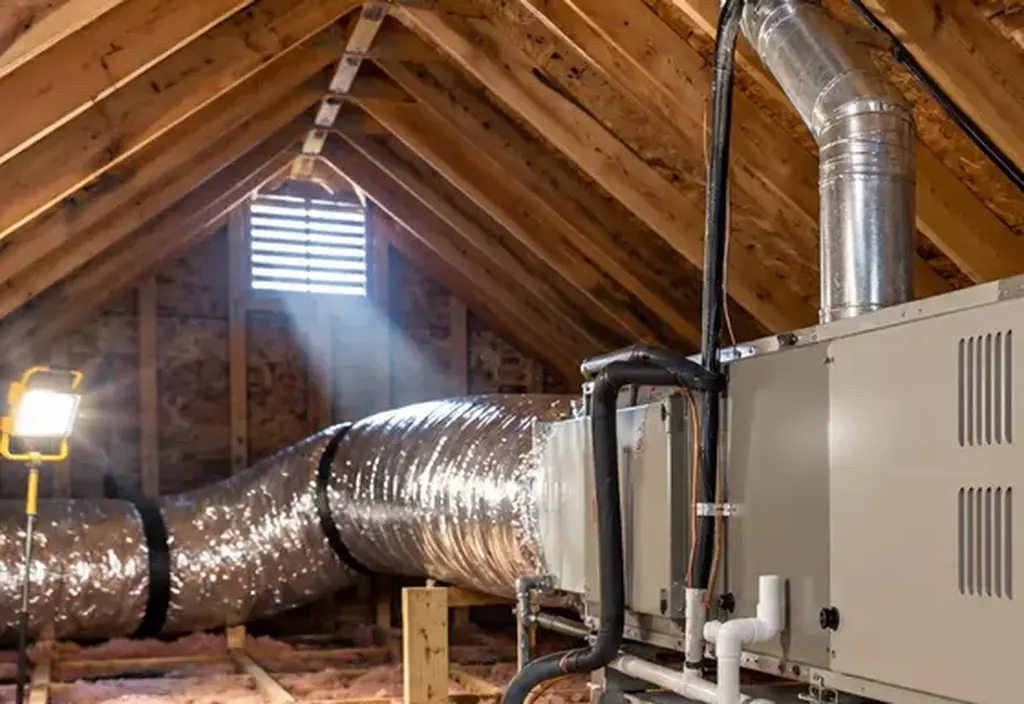
In most Kyle houses the ducts run through the attic, which on an August afternoon is far hotter than the outdoors. A torn or disconnected flex duct up there dumps cooled air into the hottest space in the house, and the room at the end of that run never cools.
The line is answered 24/7. Visits depend on which contractors are working your ZIP code.
Why attic ducts fail here
Most Kyle homes are newer, about 87% built since 2000 (Census ACS 2020–2024), and the common construction puts the air handler or furnace and its ducts in the attic. Flexible duct is quick to install and easy to damage: it gets stepped on during cable or satellite work, pinched where it crosses a brace, sags between supports, and its taped joints let go after years of attic heat.
The attic is where the loss is largest. With August highs averaging 96.8°F at the San Marcos station (NOAA 1991–2020 normals), an attic runs well above that. Air leaking out of a supply duct is cooled air lost to that heat; air leaking into a return duct is attic air pulled into the system.
What a technician measures
- Airflow at the registers in the rooms that do not cool, against the rooms that do
- Static pressure across the system, which shows whether the ducts and filter choke the blower
- Temperature at the supply registers compared with the air leaving the coil, which shows heat gained along the way
- A look at the attic runs for crushed, torn, disconnected or sagging sections
Those measurements turn "the back bedroom is hot" into a specific finding: a disconnected run, an undersized return, or a system that is short of capacity altogether.
Repair, rebalance or replace
A disconnected or torn run is a repair. A long run that was undersized from the start may need a larger duct or a second return. When the system is being replaced anyway, ducts that are past saving are cheaper to replace while the attic is open. The contractor's quote should say which of these it covers.
What to have ready when you call
- Which rooms are hot, and on which floor
- Whether those rooms were always hot or became hot recently
- Whether anyone has worked in the attic lately
- The install year of the system, from the label in the attic unit
- Your address and ZIP code, and attic access
Common questions
Should I close vents in rooms I do not use? It usually raises the pressure in the ducts and makes leaks worse rather than pushing air elsewhere. Ask a technician before doing it.
Is a bigger AC the fix for a hot room? Rarely. A room that will not cool because its duct is crushed stays hot with a larger unit. Fix the duct first, then judge the size.
Have the install year and the thermostat reading ready. Ask who is taking calls in your ZIP code today.
(888) 217-3739