Kyle, Buda, Uhland · Hays County, TX
AC repair, heating and HVAC replacement in Kyle, TX
One phone line to independent heating and cooling contractors working Kyle and the towns along I-35 and FM 150. Say what the system is doing and roughly when it went in, and the call is routed to a contractor taking work in your ZIP code.
The line is answered 24/7. Visits depend on which contractors are working your ZIP code. Calls may be recorded.
- Independent Contractors on this line are separate businesses, not this site.
- No charge from this site You never pay this site for the call or the match.
- No figures here The contractor quotes after seeing the system.
- Public license Every Texas HVAC contractor has a TDLR license you can look up.
Kyle was built in a hurry, and its systems are aging together
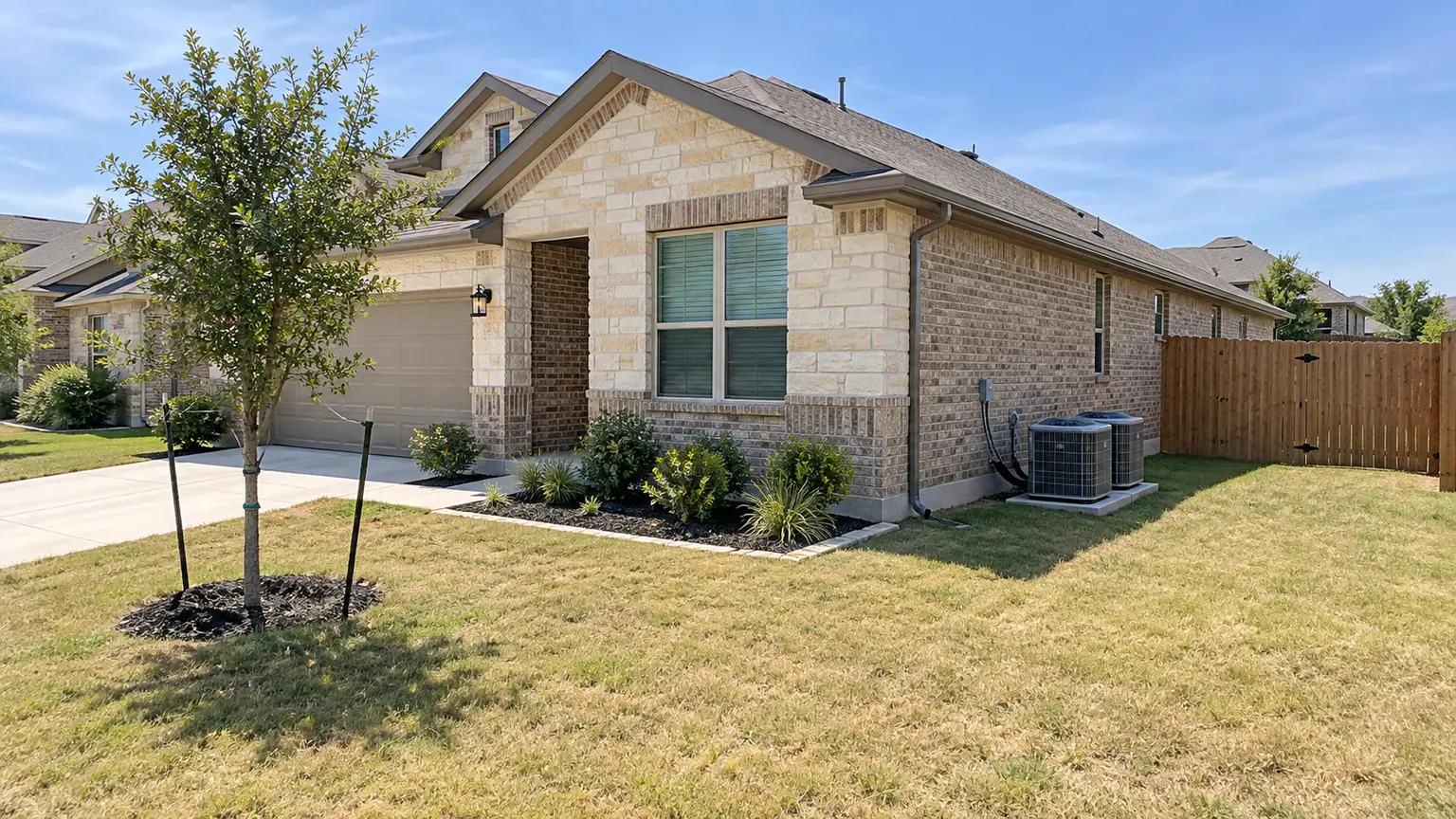
Kyle had about 5,300 residents in the 2000 Census and 28,016 in 2010. The 2020 count was 45,697, and the Census Bureau estimated 69,917 for July 2025. Housing followed the same curve. Of the homes in Kyle today, about 38% were built between 2000 and 2009 and another 39% between 2010 and 2019, according to the Census American Community Survey (2020–2024). The median home in the city dates to 2010.
That makes the replacement wave here unusually predictable. A neighborhood finished in 2005 got its outdoor units, coils and furnaces in the same few months, mostly the same builder-grade models. Those systems are now past twenty summers of Central Texas heat, and they tend to fail in clusters on the same streets.
Houses from the 2010s are next. A system installed in 2013 runs on R-410A and is entering the stretch where a failed compressor or a leaking indoor coil makes the repair-or-replace conversation real.
Heat here is split almost evenly: about 51% of Kyle households heat with electricity and 48% with natural gas. In practice that means a heat pump or electric strips in one house and a gas furnace in the attic next door, and the questions on the call differ.
What is the system doing right now?
No cooling on a 100°F afternoon
The San Marcos weather station, the nearest one with 1991–2020 NOAA normals, averages about 117 days a year at 90°F or above and about 21 days at 100°F or above. August nights average a low near 74°F, so a house without cooling does not recover overnight.
Calls are answered at night and on weekends. Whether a technician can reach the house today depends on who is working that ZIP code and how full the day is; ask on the call. If someone in the house is elderly, very young or unwell and the indoor temperature keeps climbing, move them somewhere cool first.
If you smell gas or a carbon monoxide alarm sounds, leave the house and call 911 or the gas utility from outside before calling anyone else.
Calls may be recorded.
Repair or replace a builder-grade system
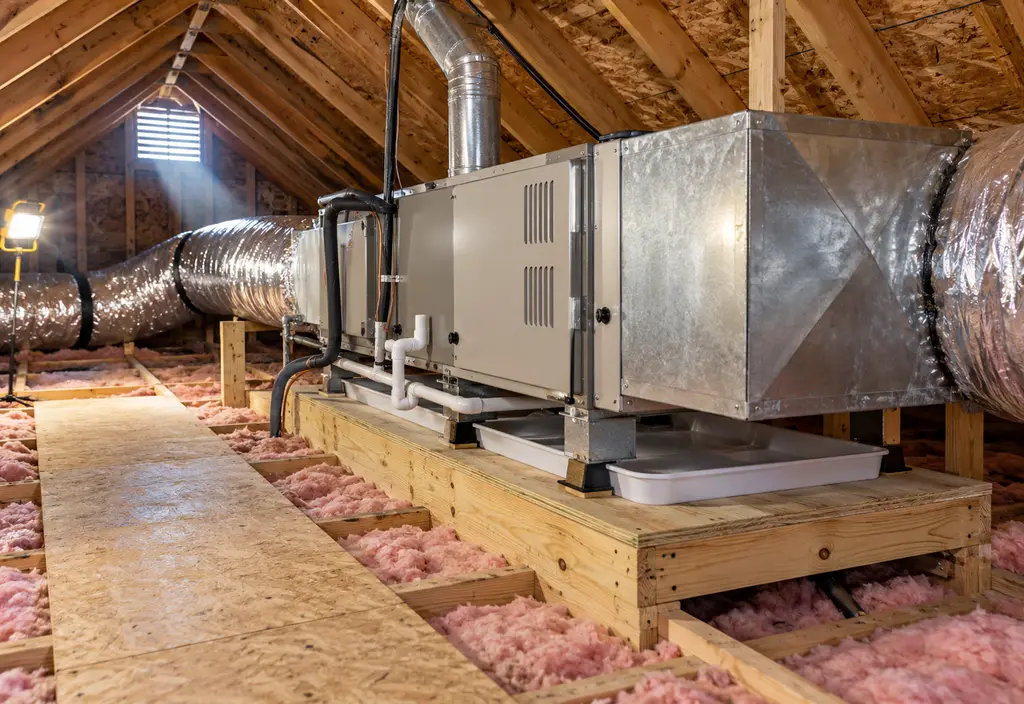
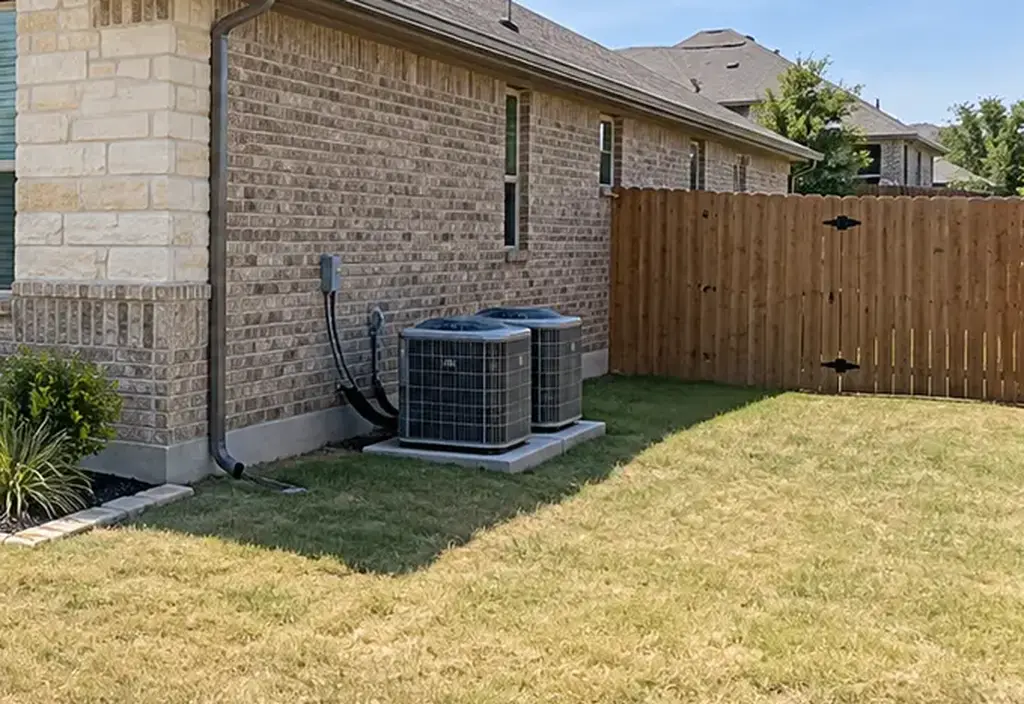
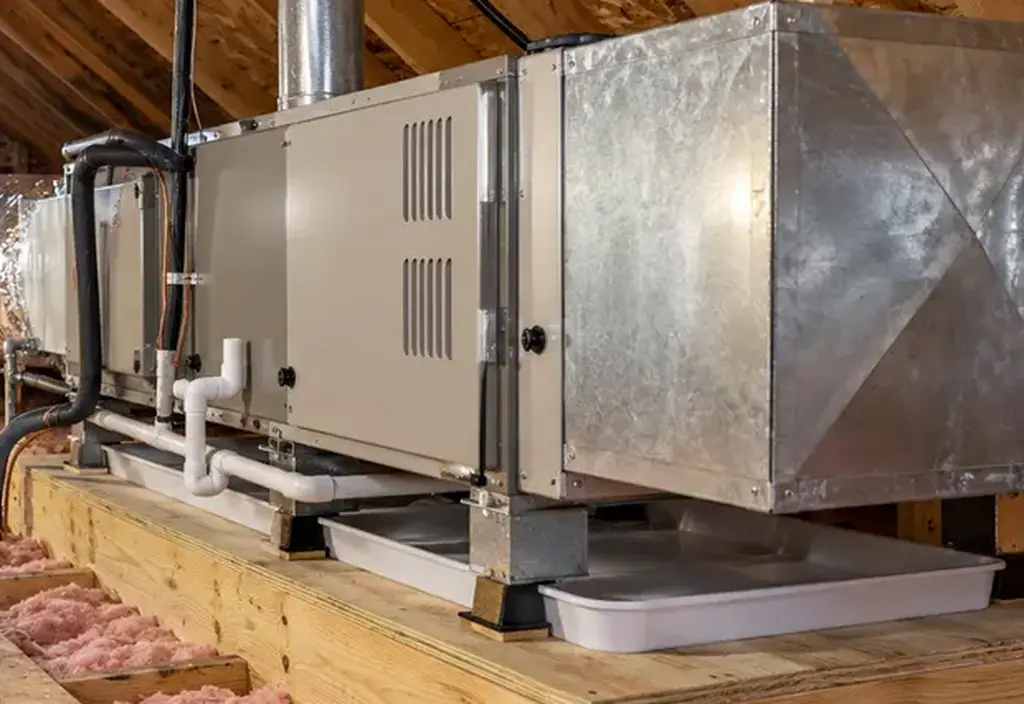
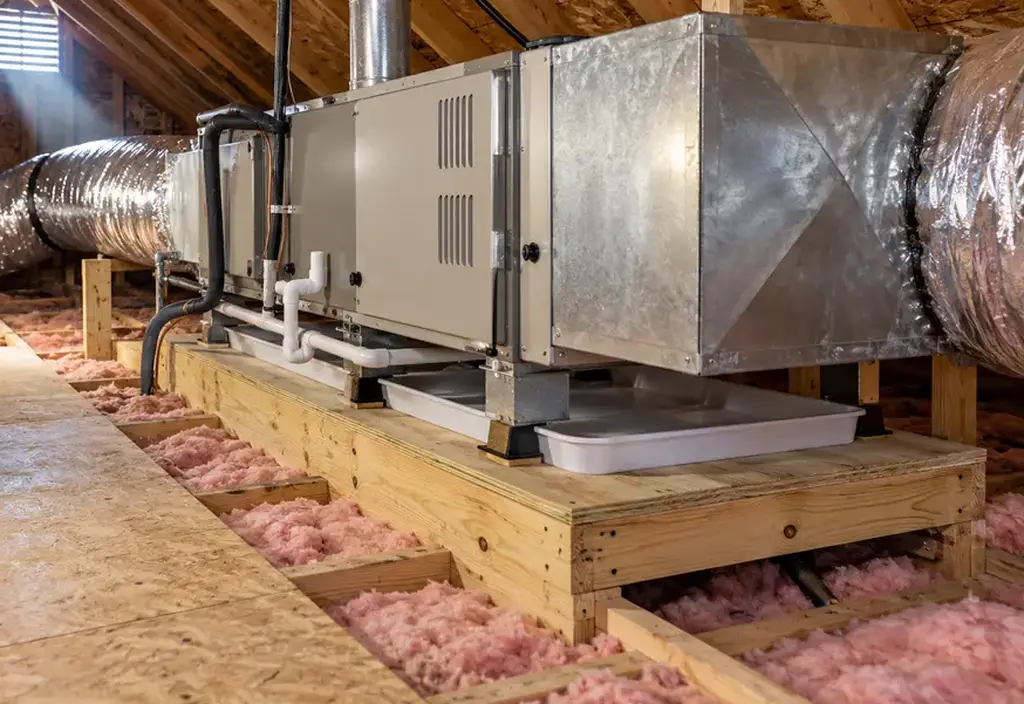
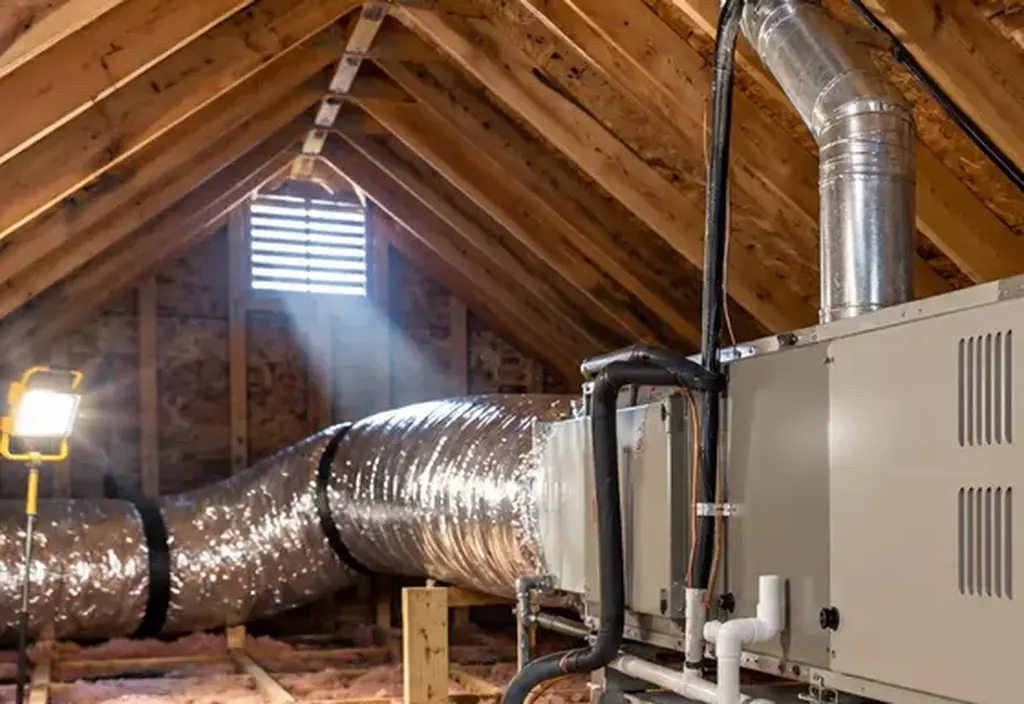
Most first systems in Kyle subdivisions were sized and chosen by the builder, often as a matched pair: an outdoor condenser or heat pump at the side of the house and a furnace or air handler with its coil in the attic. Four facts decide what happens when one fails.
- The install year. It is on the data plate of the outdoor unit and on the label inside the attic unit. A system installed around 2005 and a system installed around 2015 are different conversations.
- What failed. A capacitor, contactor, fan motor, ignitor or flame sensor is a part. A compressor, an indoor coil leak or a cracked heat exchanger is a large share of the machine.
- The refrigerant. Systems installed from about 2010 to 2025 run on R-410A. Many systems installed before 2010 run on R-22, which has not been produced since 2020, so a leak on one of those usually ends the repair path.
- The recharge history. Refrigerant is not used up. A system that has been topped off twice has a leak nobody has located yet.
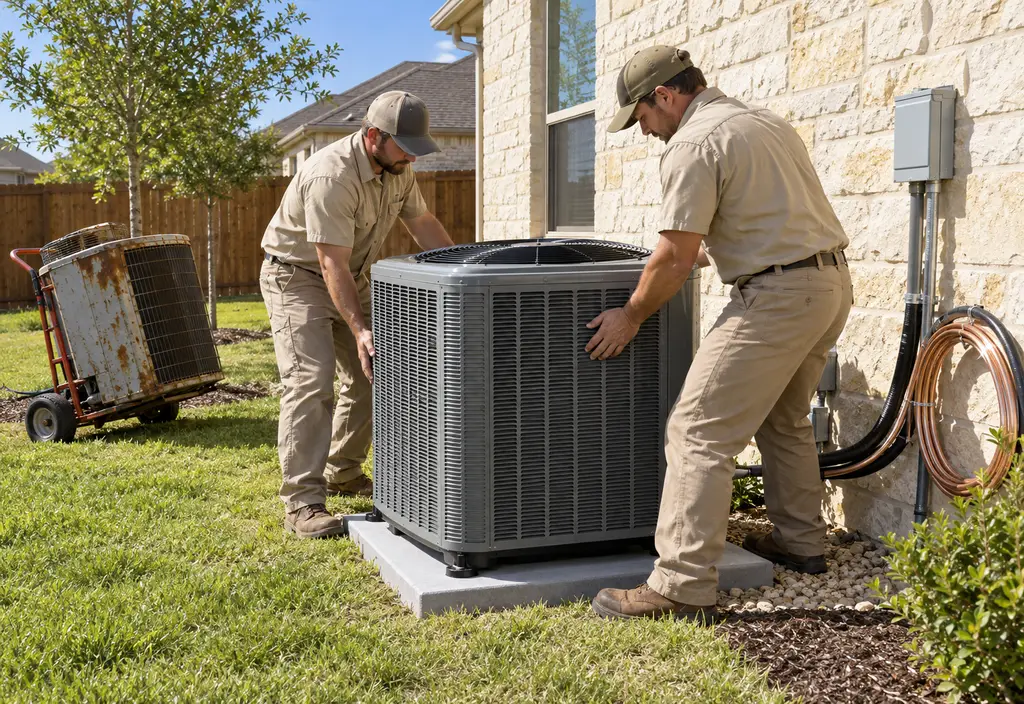
When replacement wins, the attic half matters as much as the outdoor half. A new outdoor unit paired with a twenty-year-old attic coil does not perform the way the new unit is rated. Ask any contractor quoting the job which pieces the quote replaces: outdoor unit, indoor coil, furnace or air handler, line set, drain pan, thermostat.
Pick the service that fits
What to tell the dispatcher
- What the system is doing, in one plain sentence: blowing warm, iced lines, not turning on, water at the attic unit, breaker trips.
- The thermostat setting and the actual indoor reading. "Set to 74°F, reading 85°F" is the most useful sentence on the call.
- Whether it is a gas furnace, a heat pump or electric heat, and the install year if you can find it.
- Your address and ZIP code, whether the attic has a pull-down ladder, and whether a gate or a dog stands between a technician and the outdoor unit.
- What you already tried: a new filter, the breaker, the float switch on the drain line.
"Kyle, 78640. Heat pump, installed 2009, blowing warm since this afternoon. Set to 74°F, it's 86°F inside. The outdoor fan isn't spinning. Attic has a pull-down ladder. What is your diagnostic charge, and does it go toward the repair?"
Calls may be recorded.
The diagnostic visit and the repair are two different things
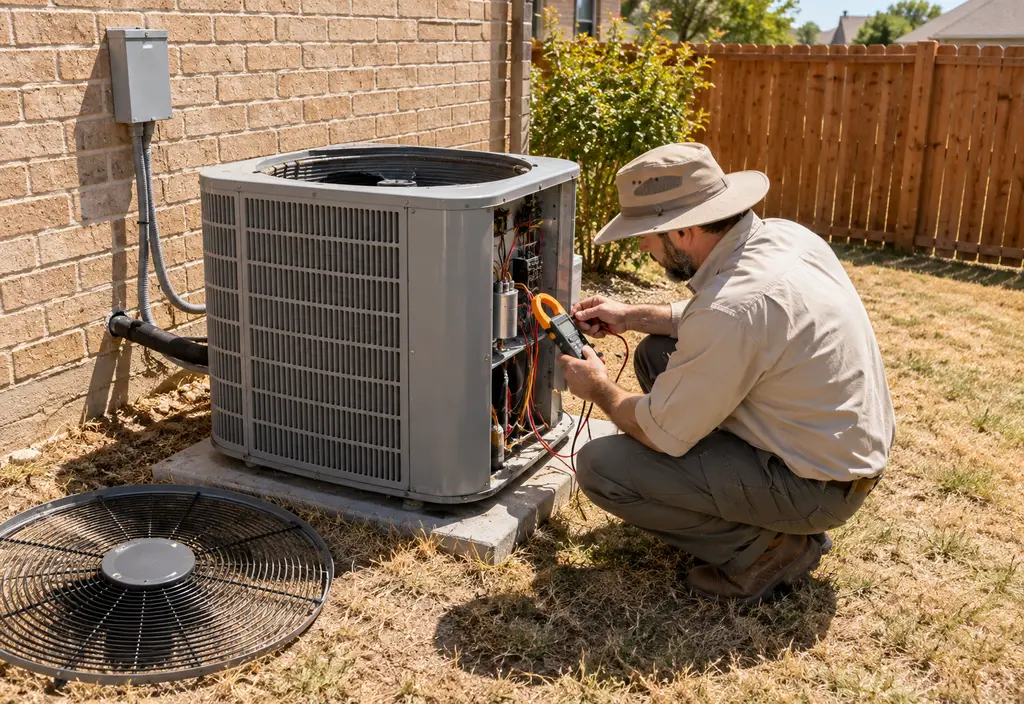
A technician's first job is to find the fault: thermostat call, airflow and filter, electrical parts at the outdoor unit, refrigerant pressures and the temperature drop across the coil, and on a gas furnace the ignition sequence and combustion readings. The contractor charges for that visit on its own terms.
The repair is agreed after the finding. Some contractors credit the diagnostic charge toward the repair when the work goes ahead on the same visit, some credit part of it, some none. There is no standard, so ask before the visit is booked rather than at the door.
The one thing that costs nothing is this site: you never pay it, and the contractor's figure is the same whether or not you called through it.
Six questions to ask the contractor
- What is your TDLR license number, and what company name is it held under?
- What is the diagnostic charge, and is it credited toward the repair?
- What exactly failed, and what readings show it? Can I have that in writing?
- If you are recommending replacement, what size are you proposing and what was it based on?
- Does the quote replace the attic coil and drain pan too, or only the outdoor unit?
- Who pulls the City of Kyle permit, and when is the inspection?
Check the license, and the permit, before work starts
In Texas, heating and cooling contractors are licensed by the Texas Department of Licensing and Regulation (TDLR). A Class B license covers cooling systems up to 25 tons and heating systems up to 1.5 million BTU per hour, far above any home system; a Class A license has no size limit. Technicians working under a contractor must at least be registered with TDLR.
TDLR rules require the contractor's license number on its service vehicles, in its advertising and on proposals and invoices. If it is missing from a written quote, ask for it. The number can be checked on TDLR's public license search at tdlr.texas.gov in about a minute.
The City of Kyle requires a permit for installing or replacing heating or air conditioner equipment and for most repairs to it. The contractor pulling that permit must be registered with the city and licensed by TDLR. Kyle builds to the 2021 International Residential and Mechanical Codes, and permitted work is followed by a city inspection.
Kyle weather, in the numbers a system feels
The NOAA 1991–2020 normals for San Marcos, about eight miles southwest of downtown Kyle, put the average August high at 96.8°F and the average August low at 73.7°F. Cooling degree days run near 2,970 a year against about 1,620 heating degree days, so an air conditioner here works roughly twice as hard as the heat does.
Winter is short but real. The same station records about 20 nights a year at or below 32°F, most of them in December, January and February. That is where heat pumps lean on backup electric strips and where an attic furnace that sat idle since March gets its first test.
Questions people ask before they call
Is Kyle TX AC a heating and cooling company?
No. It is an independent phone line and a set of reference pages. The repairs, installations and replacements are done by independent contractors, who set their own terms.
Does anyone answer at night or on a weekend?
The line is answered around the clock. Whether a contractor can come out that night depends on who is working your ZIP code at that hour; ask on the call. See the availability notice at the foot of the page.
What does a visit cost?
This site does not know and does not publish figures. Each contractor sets its own diagnostic charge and quotes repairs after seeing the system. Ask about the diagnostic charge before the visit is booked.
My house was built in 2006 and still has the original system. Should it be replaced?
Not automatically. Age changes the odds, not the verdict. What failed, what refrigerant the system runs on and how many times it has been recharged decide it. A contractor can tell you all three after one visit.
Does Kyle require a permit to replace an AC or furnace?
Yes. The City of Kyle lists installing or replacing heating and air conditioner equipment among the work that needs a permit, and the contractor must be registered with the city and licensed by TDLR. Ask who pulls the permit before you sign.
My system runs on R-410A. Do I have to replace it?
No. An existing R-410A system can still be run, repaired and recharged. Since January 2025, new equipment ships with R-454B or R-32 instead, which matters when a large refrigerant repair is on the table.
Do I pay anything to use this site?
No. You never pay this site. We may receive compensation when a call connects to a contractor; what the contractor charges for its work is between you and the contractor.
Start with what the system is doing
Thermostat setting, indoor reading, install year and ZIP code. With those four, the call gets to the part that matters: who can come, when, and what the visit covers.
You never pay this site. Calls may be recorded.