Kyle, TX · Hays County
Heating repair in Kyle, TX
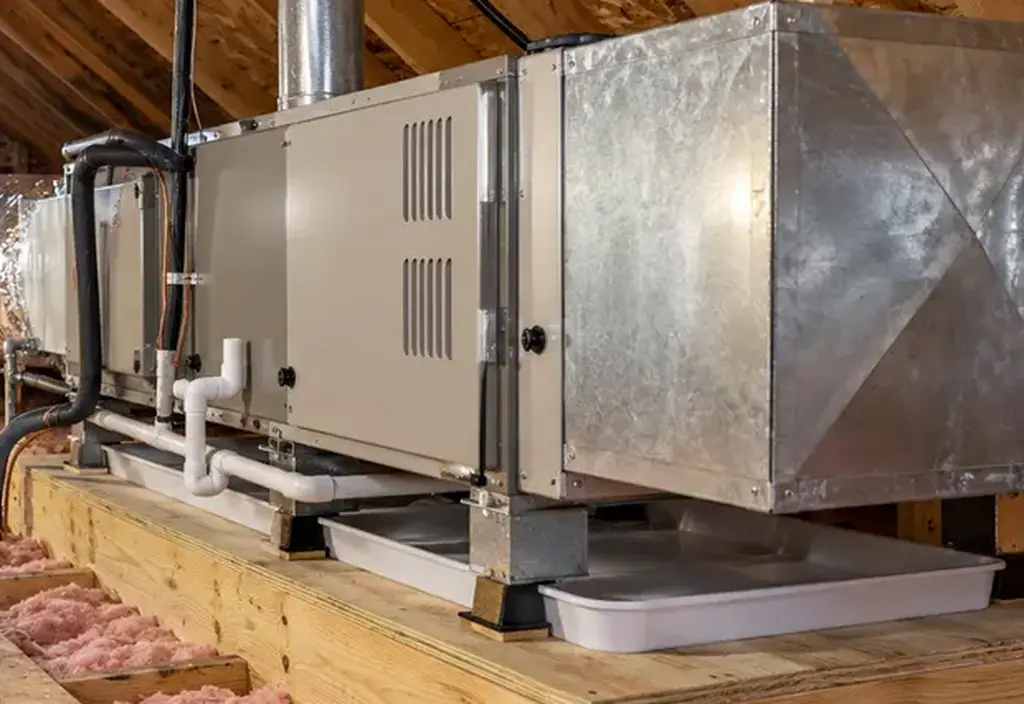
Kyle homes split almost evenly between gas and electric heat, and the no-heat call is different for each. A gas furnace in the attic usually stops somewhere in its ignition sequence; an electric system usually loses a heat strip, a sequencer or the heat pump's defrost.
The line is answered 24/7. Visits depend on which contractors are working your ZIP code.
Gas or electric: know which before you call
About 48% of Kyle households heat with natural gas and 51% with electricity (Census ACS 2020–2024). The city's economic development office lists two natural gas providers, CenterPoint Energy and Texas Gas Service, and Pedernales Electric Cooperative for electricity. A gas furnace has a flue pipe running up through the roof and a gas line with a shutoff valve at the unit; an electric system has neither.
What a technician checks on a gas furnace
The thermostat first: setting, reading, and whether it is calling for heat. Then the filter and airflow, because a choked filter overheats the heat exchanger and trips the limit switch. Then the ignition sequence in order: the inducer motor, the pressure switch, the hot-surface ignitor, the gas valve, the flame sensor. The step where it stops names the part.
On a gas appliance the visit should end with numbers. Combustion and carbon monoxide readings off an instrument, and a look at the flue and the heat exchanger. Ask for them in writing.
What a technician checks on electric heat
Heat strips in the air handler sit on their own breakers and are switched in stages. A technician checks each element, its limit and sequencer, and the breakers, and on a heat pump the defrost control and reversing valve. A system that heats on some days and not others often has one stage out.
Why the first cold front catches so many systems
The NOAA 1991–2020 normals for San Marcos show about 20 nights a year at or below 32°F, and a January average low near 39°F. A furnace that sat idle in a hot attic from March to November gets asked to work on the first cold night, and dust on the burners, a weak ignitor or a dirty flame sensor all show up the same evening across town. Running the heat for twenty minutes on a mild evening in late October finds those faults while appointments are easier to get.
Diagnostic visit and repair
The contractor charges for the visit that finds the fault, on its own terms. The repair is quoted after the finding. Some contractors credit the diagnostic charge toward the repair; ask before the visit is booked.
What to have ready when you call
- Gas furnace, heat pump, or electric heat strips
- Whether there is any heat at all, and what the thermostat shows
- The setting and the indoor reading
- The install year from the label in the attic unit
- Your address and ZIP code, and whether the attic has a pull-down ladder
Common questions
I smell gas. Leave the house and call 911 or the gas utility from outside. That call comes before any contractor.
The furnace clicks and tries but never lights. That is usually the ignitor, the flame sensor or the pressure switch, told apart at the furnace. Do not keep cycling the thermostat to force it.
Is the contractor licensed? Heating work in Texas is licensed by TDLR. Ask for the number and check it before work starts.
Have the install year and the thermostat reading ready. Ask who is taking calls in your ZIP code today.
(888) 217-3739